
Orthodox Jews affirmed the protestant Old Testament
At the outset, it is important to emphasize Romans 3:2, which states, “Much in every way. To begin with, the Jews were entrusted with the oracles of God,” or, in another translation, “Much in every way! First of all, the Jews have been entrusted with the very words of God.” This passage clearly indicates that the Jewish people were entrusted with the authentic Old Testament Scriptures.
The critical question, then, concerns the identity of this canon: which specific collection of books had been entrusted to them? Some Christian traditions argue that this refers to the broader corpus found in the Septuagint, including the so-called Deuterocanonical books.
However, I will argue that the Scriptures referenced in Romans 3:2 must be understood as the canon preserved by the Palestinian Jews—particularly the Pharisees—who held recognized authority over religious matters during the time of Jesus. It is noteworthy that Jesus engaged in frequent debate and dispute with the Pharisees, yet there is no recorded instance where He challenged their possession or transmission of the Scriptures themselves. This supports the conclusion that the canon entrusted to the Jews was the traditional Hebrew canon, rather than the expanded Greek Septuagint collection.
With the argument now addressed, the following early sources provide affirmation:
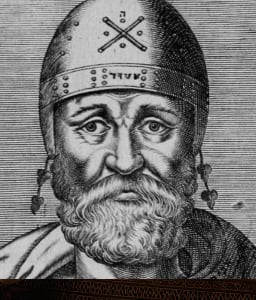 Philo of Alexandria (c. 20 BC – c. 50 AD) was a Hellenistic Jewish philosopher who lived in Alexandria, Egypt. He sought to harmonize Jewish theology with Greek philosophy, particularly Platonism. Although Philo frequently quoted the Septuagint (the Greek translation of the Hebrew Scriptures), his references were limited to the books of the traditional Hebrew canon—the Law, the Prophets, and the Writings—and he never cited the Apocryphal or Deuterocanonical books as Scripture. His writings suggest that, despite using the Septuagint, he recognized only the same core books later affirmed in the Jewish and Protestant Old Testament canons.
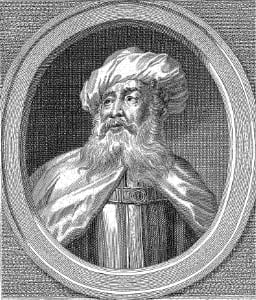 Flavius Josephus (c. 37–100 AD) was a Jewish historian and former priest who lived during the first century. In his work Against Apion (Book 1, §8), Josephus clearly outlined the Jewish canon, describing 22 sacred books recognized by the Jews—corresponding to the same content as the 39 books of the Protestant Old Testament, though organized differently. He emphasized that these books were divinely inspired and that no additions had been made since the time of Artaxerxes (5th century BC). Josephus did not include the Apocryphal books, indicating that the Jewish canon in his day excluded the later additions found in the Septuagint.
 Rabbi Akiva (c. 50–135 AD) was a highly influential Jewish sage and leader during the late first and early second centuries, instrumental in shaping post-Temple Judaism. He played a key role in affirming the boundaries of the Hebrew Scriptures after the destruction of the Second Temple. Rabbi Akiva strongly upheld the authority of the traditional 22-book Jewish canon, corresponding to the Protestant Old Testament. He rejected the inclusion of later writings such as the Apocrypha, and notably opposed the acceptance of books like Sirach. His influence helped solidify the canon recognized by Rabbinic Judaism, affirming the established Hebrew Scriptures.
 The “Council of Jamnia” (c. 90 AD) refers to a gathering of Jewish rabbis at Yavne (Jamnia) after the destruction of the Jerusalem Temple. While not a formal council in the Christian sense, this meeting involved discussions about the status of certain disputed books, such as Esther, Ecclesiastes, and Song of Songs. However, scholars agree that the core Hebrew canon was already largely established before Jamnia. The discussions at Jamnia confirmed the existing 22-book canon, corresponding to the Protestant Old Testament, and did not authorize the Apocryphal books. Thus, Jamnia affirmed rather than created the recognized Jewish Scriptures.
 2 Esdras 14, a Jewish apocalyptic text dated to the late first century AD, describes how Ezra, guided by divine revelation, restores the lost Scriptures after the Babylonian exile. According to the account, Ezra dictates 94 books: 24 of them (corresponding to the traditional Hebrew canon) are meant for public reading, while 70 are reserved for a select, wise group. This distinction strongly supports the existence of an established, smaller canon for the general Jewish community. 2 Esdras 14 thus affirms that the publicly recognized Scriptures consisted of the same books later formalized in the Jewish and Protestant Old Testament canons.
 The Dead Sea Scrolls, discovered between 1947 and 1956 near Qumran, date from the third century BC to the first century AD and include fragments of almost every book of the Hebrew Bible. Significantly, the scrolls contain copies of all the traditional Hebrew Scriptures except Esther, but they do not treat the Apocryphal books as authoritative Scripture. While some Apocryphal writings were found, they appear alongside other non-biblical sectarian texts, not within the collection of sacred Scriptures. The Dead Sea Scrolls thus affirm that the core Jewish canon was already largely established and mirrored the later 22-book Hebrew Bible recognized in Rabbinic Judaism.
 The Babylonian Talmud, completed around the 5th century AD, is a central text of Rabbinic Judaism, preserving legal debates and traditions from earlier centuries. It affirms the Jewish canon by recognizing a fixed set of sacred writings known as the Tanakh (Torah, Prophets, and Writings). Discussions in the Talmud, such as in Baba Bathra 14b–15a, list the canonical books, aligning with the traditional 22-book Hebrew Bible. The Talmud also reflects debates over specific books like Esther and Ecclesiastes, but ultimately upholds their inclusion. It does not recognize the Apocrypha as Scripture, confirming the limits of the Jewish canon.
 The Septuagint (LXX) is a Greek translation of the Hebrew Scriptures produced in the 3rd–2nd centuries BC for the Jewish community in Alexandria. While it included translations of the traditional Hebrew books, it also contained additional writings (later called the Apocrypha). However, the presence of these extra books does not imply they were considered Scripture by all Jews. Early evidence shows that the core Hebrew canon remained distinct. Jewish leaders and Jesus Himself primarily referenced the Hebrew Scriptures. Thus, while the Septuagint was influential, it ultimately affirms the established Jewish canon by preserving the recognized books in Greek translation.
 Palestinian Jews, centered in Judea, adhered strictly to the traditional Hebrew Scriptures—the 22-book canon corresponding to the Protestant Old Testament. In contrast, Alexandrian Jews, living in the Hellenistic culture of Egypt, used the Septuagint, which included additional writings (the Apocrypha). However, the Palestinian Jews maintained religious authority over the canon, and Jesus and His disciples, who engaged primarily with Palestinian Judaism, consistently affirmed the traditional Scriptures. No evidence suggests Jesus or the apostles accepted the expanded Alexandrian collection as Scripture. This distinction supports that the authoritative Jewish canon was the one preserved by the Palestinian Jews, not the broader Septuagint.
The Scripture & The Apocrypha
Malachi 4:5–6, the final verses of the Hebrew Bible, prophesy that Elijah will return “before the great and dreadful day of the Lord,” signaling a future prophetic renewal but implying that, until then, prophecy would cease. This expectation frames a long silent period after Malachi, during which no new prophetic revelation was given. Similarly, Amos 8:11–12 foretells a “famine…of hearing the words of the Lord,” further suggesting that divine revelation would be temporarily withheld. This background explains why Jews believed that the age of inspired Scripture had ended after the ministries of Ezra and Malachi.
The Apocryphal books, written during this intertestamental period, indirectly affirm this understanding. For example, 1 Maccabees 9:27 acknowledges that “prophets ceased to appear among them,” confirming that no new inspired writings were being produced. While the Apocryphal books were valued for historical and moral insights, they did not claim divine inspiration nor were they recognized as Scripture by the Jewish community.
Thus, both the prophetic expectation within the Hebrew Scriptures and the testimony within the Apocrypha itself support the conclusion that the canon was already closed with the traditional 22 books—corresponding to the Protestant Old Testament—prior to the coming of Christ.
The above also affirms the threefold criteria used to recognize the Old Testament canon in the day:
- Prophetic Authority
The book had to be written by a recognized prophet, someone inspired by the Holy Spirit, or closely associated with a prophet. Only writings believed to come through divine revelation were accepted as Scripture. - Consistency with Existing Revelation
The content of the book had to align with the theology, doctrine, and moral teachings already revealed in earlier Scriptures, particularly the Law of Moses. No book that contradicted established truth could be considered canonical. - Widespread Acceptance and Use
The book had to be widely acknowledged and used by the covenant community of Israel. It needed to be accepted across diverse Jewish communities as a standard text for teaching, worship, and religious life.
The evidence presented above is more than sufficient to demonstrate that the Old Testament canon corresponds to the Protestant canon. Before proceeding to the next section, it is important to address a common question: why do some sources refer to 22 books while others refer to 24 books in the Old Testament canon? The answer lies not in any difference of content, but in the method of arrangement. The canon remains identical; the variation simply reflects whether certain books were combined or counted separately.
Catholic & Orthodox scholars affirm the Protestant Old Testament Canon
Cardinal Cajetan (1469–1534 AD) — Catholic Theologian
“Here we conclude with the books received by the Church as canonical, and with those only that are in the Hebrew canon… not with the others which were placed in the Old Testament by the ancient fathers.”
(Commentary on the Old Testament)
- Cajetan, though Catholic, affirmed that the authoritative canon aligns with the Hebrew Scriptures.
Joseph Fitzmyer (Catholic Biblical Scholar, 20th century)
“By the end of the first century A.D., Judaism seems to have recognized a closed collection of twenty-two or twenty-four books, identical with the thirty-nine books of the Protestant Old Testament.”
(The Dead Sea Scrolls and Christian Origins, p. 70)
- Fitzmyer, a highly respected Catholic scholar, acknowledges that the Jewish canon matched the Protestant Old Testament before Christianity formally emerged.
Raymond E. Brown (Catholic Biblical Scholar)
“By the time of Jesus, there was a recognized body of sacred writings roughly equivalent to the Protestant Old Testament.”
(An Introduction to the New Testament, p. 33)
- Brown agrees that the Jewish canon was basically what Protestants accept today, not the expanded Catholic version.
Metropolitan Hilarion Alfeyev (Eastern Orthodox, b. 1966)
(Modern Orthodox theologian and bishop)
“By the time of Christ, the canon of the Hebrew Bible had already been largely defined… comprising the twenty-two books traditionally recognized by Judaism.”
(Jesus Christ: His Life and Teaching, Vol. 1, p. 28)
- He clearly states that Judaism had a fixed canon matching the 22-book Hebrew Scriptures by the New Testament period.
Gary A. Anderson (Catholic biblical scholar, University of Notre Dame)
“There was a clearly defined Jewish canon, equivalent to the Protestant Old Testament, by the first century AD.”
(Christian Doctrine and the Old Testament, p. 5)
- Although Anderson is Catholic, he admits the Jewish canon matched the Protestant Old Testament.
Trent Horn on the Hebrew Canon
“By the first century, most Jews accepted a twenty-two book canon that corresponds to the Protestant Old Testament.”
(The Case for Catholicism, p. 117)
- Trent Horn acknowledges that the Jewish canon at the time of Jesus was equivalent to the Protestant Old Testament (22 books counted differently from the Protestant 39 books, but same content).
However, Horn argues the Church had the authority to recognize a broader canon after Christ — but he still admits the Jewish canon itself was the smaller one.